The 607 BCE / 1914 Chronology Problem
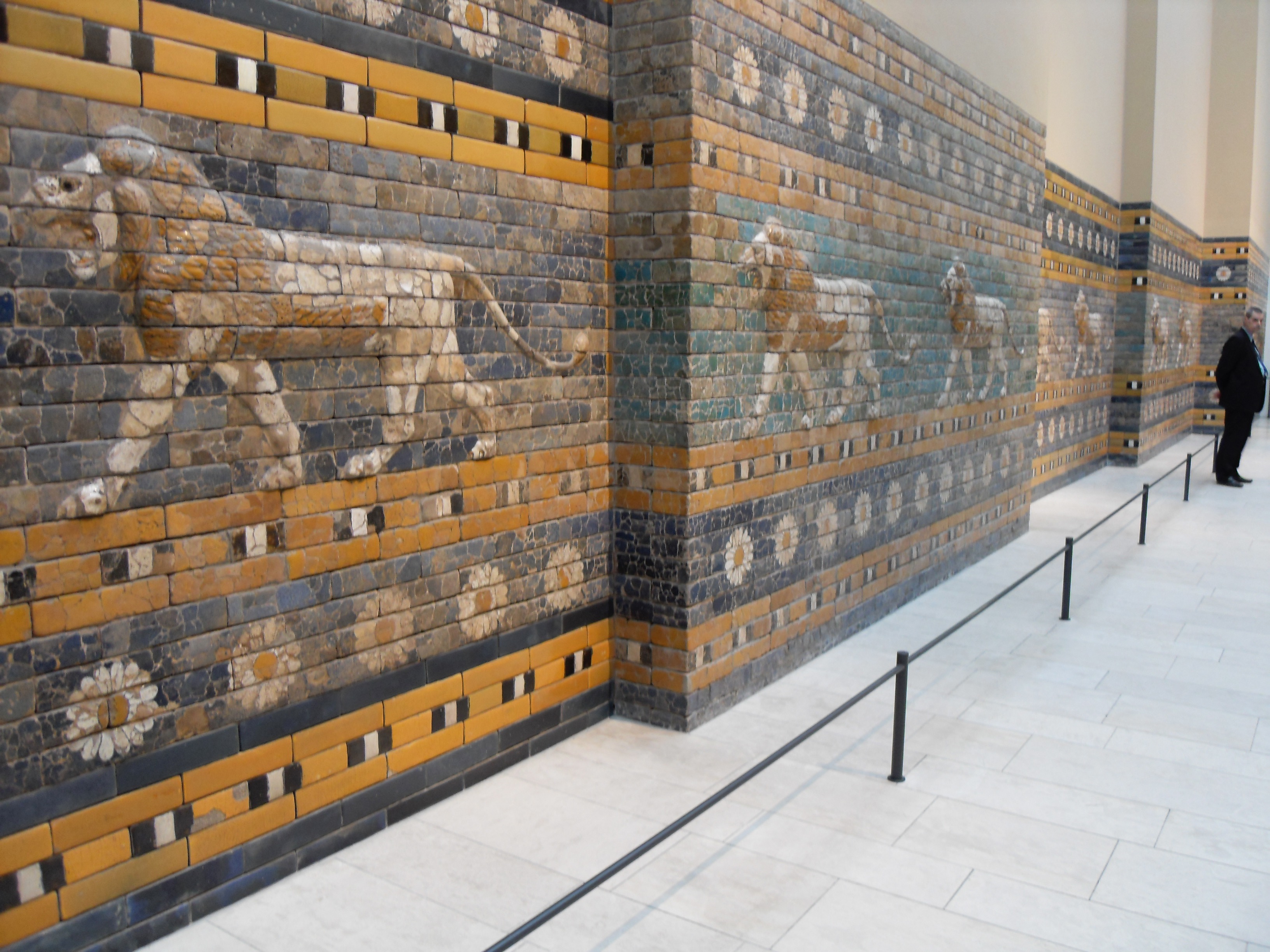 Ishtar Gate reconstruction, Pergamon Museum, Berlin. Via Wikimedia Commons. CC-BY-SA 3.0.
The date 607 B.C.E. is the most important date in Watchtower theology that virtually no one outside the organization accepts. It is the starting point of a calculation that produces 1914 — the year Jehovah's Witnesses believe Christ invisibly began ruling in heaven. Without 607, there is no 1914. Without 1914, there is no invisible presence of Christ. Without the invisible presence, there is no 1919 "inspection" of religions. Without the 1919 inspection, there is no appointment of the Watch Tower organization as God's "faithful and discreet slave." The entire authority structure of Jehovah's Witnesses rests on a single chronological claim that is contradicted by every line of available historical evidence — Babylonian chronicles, astronomical tablets, cuneiform business documents, Egyptian synchronisms, and the testimony of ancient historians. This article explains what the calculation claims and why the evidence does not support it.
The Calculation
The Watchtower's chronological framework links three biblical passages to produce the date 1914:
Step 1: Daniel 4 — The "Seven Times" Daniel chapter 4 describes a dream in which King Nebuchadnezzar is told that a great tree will be chopped down and banded for "seven times." In its original context, this prophecy refers to Nebuchadnezzar's own period of madness. The Watchtower, however, claims a secondary prophetic fulfillment: the "seven times" represent a period during which God's rulership on earth would be interrupted — the "appointed times of the nations" (Luke 21:24).[1]
Step 2: Converting "Seven Times" to Years Using Revelation 12:6, 14, the Watchtower calculates that "three and a half times" equal 1,260 days. Therefore "seven times" equal 2,520 days. Applying the "year-for-a-day" principle from Numbers 14:34 and Ezekiel 4:6, the 2,520 days become 2,520 years.[2]
Step 3: The Starting Point — 607 B.C.E. The Watchtower teaches that Jerusalem was destroyed by the Babylonians in 607 B.C.E., ending the line of Davidic kings and beginning the period of Gentile domination. Counting 2,520 years forward from October 607 B.C.E. (accounting for the absence of a year zero) yields October 1914 C.E.[3]
The calculation can be summarized:
| Element | Value | Source |
|---|---|---|
| Prophetic period | "Seven times" = 2,520 years | Daniel 4:16; Revelation 12:6, 14; Numbers 14:34; Ezekiel 4:6 |
| Starting point | 607 B.C.E. (destruction of Jerusalem) | Watchtower chronology (contradicted by all secular evidence) |
| Endpoint | 1914 C.E. | 607 + 2,520 − 1 (no year zero) = 1914 |
The entire structure depends on one factual claim: that Jerusalem was destroyed in 607 B.C.E. If this date is wrong, 1914 collapses — and with it, every doctrine built upon it.
Why 607 B.C.E. Is Wrong
The Scholarly Consensus: 587/586 B.C.E.
Virtually every historian, archaeologist, and Assyriologist in the world dates the Babylonian destruction of Jerusalem to 587 or 586 B.C.E. — twenty years later than the Watchtower claims. This is not a marginal academic dispute. It is one of the most securely dated events in ancient Near Eastern history, established by multiple independent lines of evidence.[4]
Even the Watchtower's own 2011 Watchtower articles attempting to defend 607 B.C.E. were forced to acknowledge: "According to historians and archaeologists, 586 or 587 B.C.E. is generally accepted as the year of Jerusalem's destruction."[5] The same articles footnoted: "None of the secular experts quoted in this article hold that Jerusalem was destroyed in 607 B.C.E."[6]
The Evidence Against 607 B.C.E.
The date of 587/586 B.C.E. is established by at least five independent categories of evidence:
| Evidence Type | What It Shows | Implication for 607 |
|---|---|---|
| Babylonian Chronicles | Clay tablets recording major events by regnal year of Babylonian kings; chronicle Nebuchadnezzar's campaigns including the siege of Jerusalem | Places Jerusalem's destruction in Nebuchadnezzar's 18th/19th regnal year, corresponding to 587/586 B.C.E. |
| Cuneiform Business Tablets | Tens of thousands of dated economic and legal documents from every year of every Neo-Babylonian king's reign | When regnal years are totaled from the last Neo-Babylonian king (Nabonidus) backward, the date for Jerusalem's destruction is 587 B.C.E.[7] |
| Astronomical Tablets (VAT 4956) | Tablet recording 30+ astronomical observations for Nebuchadnezzar's 37th year; includes lunar positions, planetary observations, and eclipse data | Five observations conclusively place Nebuchadnezzar's 37th year as 568/567 B.C.E.; counting back to his 18th year yields 587/586 B.C.E.[8] |
| Ptolemy's Canon / King Lists | Astronomical canon listing Babylonian and Persian kings with regnal lengths, independently confirmed by cuneiform sources | Consistent with 587 B.C.E.; the Watchtower admits omissions but cannot demonstrate errors in the regnal lengths given |
| Synchronisms with Egyptian and Persian chronology | Cross-references between Babylonian, Egyptian, and Persian records anchor the Neo-Babylonian period independently | All synchronisms confirm the standard chronology placing Jerusalem's destruction in 587/586 B.C.E. |
As early as 1929, Raymond Philip Dougherty's Nabonidus and Belshazzar demonstrated that knowledge of the Neo-Babylonian kings was "based upon more than two thousand dated cuneiform documents."[9] Today, that number has grown to many thousands more.
The Internal Contradiction
Perhaps the most damaging evidence comes from the Watchtower's own publications. The organization's Insight on the Scriptures encyclopedia accepts the standard regnal years for every Neo-Babylonian king. It also accepts 539 B.C.E. as the date Babylon fell to Cyrus the Great — a date derived from the very same cuneiform and astronomical sources that establish 587 B.C.E.[10]
Here is the problem: if you accept the Watchtower's own king-list data and count backward from 539 B.C.E. through the known reigns of Neo-Babylonian kings, you arrive at 587 B.C.E. for Nebuchadnezzar's 18th year — not 607.[11]
| King | Reign (years) | Dates (B.C.E.) |
|---|---|---|
| Nabonidus | 17 | 556–539 |
| Labashi-Marduk | <1 | 556 |
| Neriglissar | 4 | 560–556 |
| Amel-Marduk (Evil-Merodach) | 2 | 562–560 |
| Nebuchadnezzar II | 43 | 605–562 |
| Nebuchadnezzar's 18th year | — | 587 B.C.E. |
To make 607 work, the Watchtower would need to insert twenty additional years into the Neo-Babylonian king list — years for which no cuneiform evidence exists. Business tablets with continuous dates exist for every year of every known king in this period, leaving no room for unknown rulers or gaps.[13]

Coping with toxic family dynamics, estrangement, and rebuilding your life. For anyone dealing with the fallout of leaving a high-control group.
View on Amazon →The 606-to-607 Correction
An often-overlooked detail reveals the calculation's fragility. Russell originally used 606 B.C.E. as his starting point, arriving at 1914 by counting 2,520 years forward. However, this arithmetic was wrong: there is no "year zero" between 1 B.C.E. and 1 C.E., so 2,520 years from 606 B.C.E. actually ends in 1915, not 1914.[14]
This error was quietly corrected in 1944 by shifting the starting date from 606 to 607 B.C.E. — a change made not because of any new historical evidence about when Jerusalem fell, but solely to preserve the target date of 1914. The historical date was adjusted to fit the prophetic conclusion, rather than the conclusion being derived from the evidence.[15]
Carl Olof Jonsson and The Gentile Times Reconsidered
In 1968, a Swedish Jehovah's Witness named Carl Olof Jonsson, serving as a full-time pioneer, was challenged during a Bible study to prove the Watchtower's date of 607 B.C.E. Over the following years, Jonsson conducted intensive research into the archaeological and astronomical evidence.[16]
In August 1977, Jonsson submitted his findings to the Watch Tower headquarters in Brooklyn — a meticulously documented treatise presenting eighteen independent lines of evidence demonstrating that Jerusalem fell in 587 B.C.E., not 607. Raymond Franz, then a Governing Body member, later described the "rather stunning effect" the treatise had on the writing staff at headquarters: "Not only the volume of the documentation, but even more so the weight of the evidence left us feeling somewhat disconcerted."[17]
Rather than engaging with the evidence, the Watchtower moved to silence the researcher. Jonsson received multiple letters ordering him not to discuss his findings with other Witnesses. According to The Jerusalem Book, in September 1978 he was summoned to a hearing before two Watch Tower representatives, and on June 9, 1982, Jonsson was disfellowshipped.[18]
In 1983, Jonsson published his research as The Gentile Times Reconsidered — now in its fourth edition and widely praised by Assyriologists. Professor Donald J. Wiseman, Emeritus Professor of Assyriology at the University of London, called it "a most valuable work." Professor Luigi Cagni of the University of Naples wrote that "Jonsson demonstrates, with the aid of irrefutable arguments, the invalidity of Jehovah's Witnesses' theory that 607 B.C. was the year when Nebuchadnezzar II desolated Jerusalem."[19]
The Domino Effect: Why the Organization Cannot Admit the Error
The date 607 B.C.E. is the first domino in a chain of doctrines. If it falls, every domino after it falls with it:
| Step | Claim | Depends On |
|---|---|---|
| 1 | Jerusalem was destroyed in 607 B.C.E. | Watchtower's interpretation of Jeremiah's "70 years" |
| 2 | The "Gentile Times" ended in 1914 C.E. | 607 + 2,520 years = 1914 |
| 3 | Christ began his invisible presence in 1914 | The 1914 date |
| 4 | Christ inspected all religions starting 1914–1919 | The invisible presence |
| 5 | Christ selected the Watch Tower organization in 1919 as his "faithful and discreet slave" | The 1919 inspection |
| 6 | The Governing Body is God's sole channel of communication on earth | The 1919 appointment |
| 7 | All Witnesses must obey the Governing Body without question | The divine appointment |
If 607 is wrong — as the scholarly consensus holds — then 1914 is wrong, and the entire chain collapses. The organization published two full-length Watchtower articles in 2011 defending 607 — which critics note appears to have been written without any credentialed Assyriologist on staff (per Orthocath's analysis) — disfellowshipped Carl Olof Jonsson for documenting the evidence, and warns members that researching this topic from outside sources is a sign of dangerous "independent thinking."[20]
The Watchtower's Defense
The organization's defense of 607 rests primarily on two arguments:
Argument 1: The Bible says 70 years. The Watchtower interprets Jeremiah 25:11 and 29:10 as requiring a full 70 years of desolation for Jerusalem (from 607 to 537 B.C.E., when the Jews returned). If Jerusalem fell in 587, the desolation lasted only about 50 years, which they argue contradicts Scripture.[21]
The problem: Most scholars understand the "70 years" as a round number referring to the period of Babylonian dominance over the nations (approximately 609–539 B.C.E.), not specifically to the desolation of Jerusalem. Jeremiah 25:11 says the nations would "serve the king of Babylon seventy years" — a phrase describing Babylonian imperial supremacy, not Jerusalem's specific period of uninhabitation. Josephus himself stated that Jerusalem was desolate for fifty years, not seventy.[22]
Argument 2: Secular sources are unreliable. The Watchtower questions the reliability of Babylonian chronicles, Ptolemy's Canon, and ancient historians, suggesting gaps or errors in the record that could add twenty years to the Neo-Babylonian period.[23]
The problem: The organization itself depends on these same sources to establish 539 B.C.E. as the date of Babylon's fall — the anchor date from which it calculates 607. It accepts the cuneiform astronomical tablets as reliable when they produce 539, but rejects them when they produce 587. This is a self-defeating argument: if the sources are too unreliable to establish 587, they are too unreliable to establish 539, and the Watchtower loses its own starting point.[24]
Timeline
| Date | Event |
|---|---|
| 1823 | John Aquila Brown first calculates a 2,520-year prophetic period from Daniel 4 |
| 1875 | Nelson Barbour connects the 2,520-year calculation to 1914 in Herald of the Morning |
| 1877 | Russell and Barbour publish Three Worlds, adopting the 1914 endpoint with 606 B.C.E. as starting date |
| 1914 | Predicted events fail to materialize; 1914 later reinterpreted as beginning of Christ's invisible rule |
| 1944 | Starting date quietly changed from 606 to 607 B.C.E. to correct the year-zero arithmetic error[15] |
| 1968 | Carl Olof Jonsson begins researching the 607 B.C.E. date after being challenged during a Bible study[16] |
| Aug. 1977 | Jonsson submits his research to Watch Tower headquarters in Brooklyn[17] |
| Jun. 9, 1982 | Jonsson disfellowshipped[18] |
| 1983 | The Gentile Times Reconsidered published[19] |
| Oct./Nov. 2011 | Watchtower publishes two-part defense of 607 B.C.E.; admits no secular expert supports the date[5] |
See Also
- Complete Timeline of Watchtower Prophecy Failures — Every major date prediction and its outcome
- 'This Generation' — Six Contradictory Definitions — The doctrine built on top of the 1914 framework
- The 'Faithful and Discreet Slave' — Shifting Identity — The authority claim that depends on 1914/1919
- Raymond Franz & Crisis of Conscience — The Governing Body member who documented the 607 problem from inside
- The Governing Body — Structure, History & Power — The authority structure that collapses without 1914
- Adventist Roots & Precursors — The origin of the 2,520-year calculation in Adventist eschatology
References
1. ↩ What Does the Bible Really Teach? (Watch Tower Bible and Tract Society, 2005), pp. 215–218, Appendix: "1914 — A Significant Year in Bible Prophecy." [jw.org]
2. ↩ What Does the Bible Really Teach?, pp. 215–218: Revelation 12:6, 14 used to calculate 2,520 days; year-for-a-day principle applied. [watchtowerlies.com]
3. ↩ "Eschatology of Jehovah's Witnesses," Wikipedia: from October 607 B.C.E. to October 1914 C.E. = 2,520 years. [en.wikipedia.org]
4. ↩ "607 / 1914 / Seven Times," JWfacts.com: over the last century, an accumulation of evidence proves beyond doubt that Jerusalem's destruction occurred between 586 and 587 B.C. [jwfacts.com]
5. ↩ "When Was Ancient Jerusalem Destroyed? — Part One," The Watchtower, October 1, 2011: "According to historians and archaeologists, 586 or 587 B.C.E. is generally accepted." [jw.org]
6. ↩ "When Was Ancient Jerusalem Destroyed? — Part Two," The Watchtower, November 1, 2011, footnote c: "None of the secular experts quoted in this article hold that Jerusalem was destroyed in 607 B.C.E." [jw.org]
7. ↩ The Watchtower, November 1, 2011, footnote e: "Business tablets exist for all the years traditionally attributed to the Neo-Babylonian kings. When the years that these kings ruled are totaled... the date reached for the destruction of Jerusalem is 587 B.C.E." [wol.jw.org]
8. ↩ "607 / 1914 / Seven Times," JWfacts.com: VAT 4956 provides 30 observations; 5 place Nebuchadnezzar's 37th year as 568/67 B.C.E., making this an absolute date. [jwfacts.com]
9. ↩ Raymond Philip Dougherty, Nabonidus and Belshazzar (Yale University Press, 1929), p. 10. [jwfacts.com]
10. ↩ Insight on the Scriptures (Watch Tower Bible and Tract Society, 1988), Vol. 1, p. 453: accepts the Cambyses tablet astronomical date and uses it to establish 539 B.C.E. [jwfacts.com]
11. ↩ "Facts about 607 B.C.E., 587 B.C. and whether Jesus started ruling in 1914," JWfacts.com: the Watchtower accepts the same sources that produce 587 to establish 539. [jwfacts.com]
12. ↩ Neo-Babylonian king list compiled from Insight on the Scriptures and standard Assyriological sources. [jwfacts.com]
13. ↩ "Eschatology of Jehovah's Witnesses," Wikipedia: the Witnesses' chronology produces a 20-year gap despite the availability of contiguous cuneiform records. [en.wikipedia.org]
14. ↩ "Failed date predictions of Jehovah's Witnesses," JWfacts.com: Russell originally used 606 B.C.E.; the arithmetic error regarding year zero was corrected in 1944. [jwfacts.com]
15. ↩ The Truth Shall Make You Free (Watch Tower Bible and Tract Society, 1943), pp. 239–240: adjusted the starting date from 606 to 607 B.C.E. to preserve the 1914 endpoint. [jwfacts.com]
16. ↩ Carl Olof Jonsson, The Gentile Times Reconsidered (Commentary Press, 4th ed., 2004), p. 7: research began in 1968 when challenged during a Bible study. [jhalsey.com]
17. ↩ Raymond Franz, foreword to The Gentile Times Reconsidered: described the "rather stunning effect" of Jonsson's treatise at headquarters in August 1977. [archive.org]
18. ↩ "Carl Olof Jonsson," The Jerusalem Book: disfellowshipped June 9, 1982. [jhalsey.com]
19. ↩ Carl Olof Jonsson, The Gentile Times Reconsidered: endorsements from Donald J. Wiseman (University of London) and Luigi Cagni (University of Naples). [friesenpress.com]
20. ↩ "Critiquing the Watchtower's Latest Defense of their 607 BCE Chronology," Orthocath: the 2011 defense published despite having no Assyriologists on writing staff. [orthocath.wordpress.com]
21. ↩ "When Was Ancient Jerusalem Destroyed? — Part One," The Watchtower, October 1, 2011: argues the Bible requires a full 70-year desolation. [jw.org]
22. ↩ Josephus, Against Apion, Book I, Chapter 21: "laid our temple desolate, and so it lay in that state of obscurity for fifty years." [jwfacts.com]
23. ↩ "When Was Ancient Jerusalem Destroyed? — Part Two," The Watchtower, November 1, 2011: questions reliability of Babylonian chronicles and business tablets. [jw.org]
24. ↩ "Facts about 607 B.C.E.," JWfacts.com: the Watchtower depends on the same astronomical tablets to arrive at 539 that it says are unreliable for arriving at 587. [jwfacts.com]