Daily Life, Culture & Restrictions
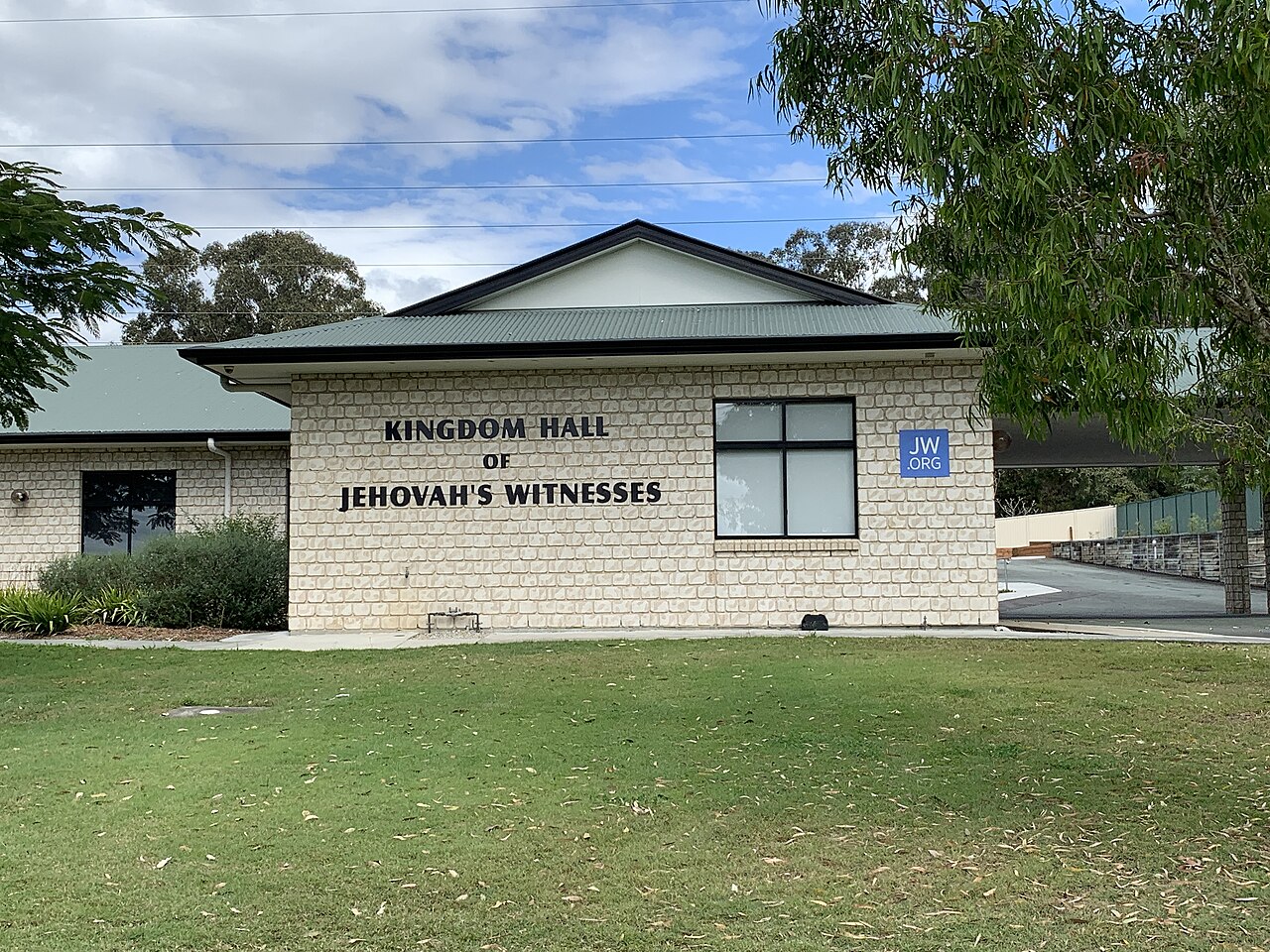 Kingdom Hall of Jehovah's Witnesses, Jefferson County, Florida. Photo by Michael Rivera. CC-BY-SA 3.0.
The Watchtower organization claims that Jehovah's Witnesses are united worldwide in "one mind" — a single, harmonious body of believers practicing their faith identically across 239 countries and territories. The reality is more complicated. While the organizational structure is indeed remarkably centralized, and the publications and meeting programs are identical worldwide, the lived experience of being a Jehovah's Witness varies significantly by country, culture, congregation, and era. A Witness in rural Alabama and a Witness in urban Tokyo share the same Watchtower study article each week — but their experience of dress codes, social norms, enforcement intensity, and cultural expectations can differ considerably. The rules are global; the enforcement is local. And the gap between official policy and lived practice is where much of the actual culture exists.
That said, the overarching framework is remarkably controlling. The organization regulates what members celebrate, who they associate with, what they wear, how they date, whether they vote, where they go to school, what entertainment they consume, how they spend their weekends, and what they are permitted to think about any of it. The following is a guide to the official framework and, where relevant, the local variations that complicate it.
The Meeting Schedule
Jehovah's Witnesses attend two meetings per week at their local Kingdom Hall:
| Meeting | When | Duration | Content |
|---|---|---|---|
| Weekend Meeting | Usually Sunday morning (but may be Saturday or Sunday at any time, depending on Kingdom Hall sharing arrangements) | ~1 hour 45 minutes | 30-minute public talk (by an elder or ministerial servant) followed by a 1-hour Watchtower Study — a question-and-answer discussion of a pre-printed article with answers provided in the magazine |
| Midweek Meeting ("Our Christian Life and Ministry") | Usually Tuesday, Wednesday, or Thursday evening | ~1 hour 45 minutes | Three sections: Bible reading and discussion; sample ministry presentations (role-played by members); Congregation Bible Study (question-and-answer format from a Watchtower publication) |
In addition to the two formal meetings, members are expected to maintain a weekly "Family Worship evening" using organization-provided materials, engage in personal Bible study (using Watchtower publications, not independent study), and read the daily text (a short scripture with Watchtower commentary for each day of the year).[2]
Multiple congregations typically share a single Kingdom Hall, with meetings staggered throughout the week. The buildings are deliberately plain — no crosses, stained glass, or religious imagery. The architecture is functional and uniform worldwide, reinforcing the organization's identity and distinguishing it from Christendom's churches.
Field Service: The Ministry
 JW literature cart, Turin, Italy. Via Wikimedia Commons. CC-BY-SA 4.0.
Reporting
Jehovah's Witnesses are expected to engage in regular field service — the door-to-door and public preaching ministry for which they are best known. Until November 2023, all active members ("publishers") were required to submit a monthly field service report recording the number of hours spent preaching, literature placed, return visits made, and Bible studies conducted. As of November 2023, most publishers are only required to report that they participated in some form of ministry during the month, along with the number of Bible studies. Members who have committed to specific hour requirements — pioneers — still report hours.[3]
Categories of Publishers
| Category | Monthly Hour Commitment | Notes |
|---|---|---|
| Publisher | No specific minimum (as of 2023) | Baptized or unbaptized member approved for the ministry; formerly expected to report specific hours |
| Auxiliary Pioneer | 30 hours | Temporary increased commitment; often during special campaign months |
| Regular Pioneer | 50 hours | Long-term commitment; viewed as a full-time ministry; formerly 90 hours (pre-1999), then 70 hours |
| Special Pioneer | 100 hours | Assigned by the organization, often to remote areas; receives a modest stipend |
Field service reports are used to evaluate members' "spirituality." Men who do not maintain regular field service activity are ineligible for appointment as elders or ministerial servants. Members who fail to submit any report for six consecutive months are classified as "inactive" — a status that carries social stigma within the congregation even though it does not formally trigger shunning.
Cultural variation: In some countries (particularly in Latin America and parts of Africa), field service participation rates are very high, and social life revolves almost entirely around congregation activities. In Western Europe and parts of North America, former members report that informal "counting time" — finding creative ways to log ministry hours without actually doing traditional door-to-door work — has become widespread, particularly since the introduction of public witnessing carts and letter-writing campaigns during and after the COVID-19 pandemic.

If you're navigating life as a PIMO or planning your exit, this book was written for you. Practical, compassionate guidance for every stage of waking up.
View on Amazon →Circuit Overseers and Organizational Oversight
According to JWiki, each congregation receives a visit from a circuit overseer approximately every six months.[5] The circuit overseer — a full-time traveling representative of the organization — spends about a week with each congregation, accompanying members in field service, giving talks, and meeting privately with the body of elders. These visits function as a combination of morale boost and inspection. Circuit overseers evaluate congregation health, recommend or remove elders and ministerial servants, and report to the branch office.
Assemblies and Conventions
In addition to weekly meetings, Witnesses attend larger gatherings:
- Circuit assemblies (one day): held twice per year at Assembly Halls or rented venues; typically 1,000–2,000 attendees
- Regional conventions (three days, usually Friday–Sunday): held annually at large arenas or convention centers; thousands of attendees; programs are identical worldwide, scripted by headquarters
Banned Holidays and Celebrations
Jehovah's Witnesses do not celebrate:
- Christmas — considered to have pagan origins (Saturnalia, winter solstice); Jesus was not born on December 25
- Easter — associated with fertility goddess Ēostre; resurrection acknowledged but not celebrated on Easter
- Birthdays — two biblical birthday accounts (Pharaoh's, Herod's) both involved deaths; the practice is considered pagan
- Halloween — associated with the occult and ancestor worship
- Valentine's Day — connected to the Roman festival of Lupercalia
- Mother's Day / Father's Day — considered to have pagan roots; viewed as elevating humans
- National holidays (Thanksgiving, Independence Day, Veterans Day, etc.) — considered expressions of nationalism
- New Year's celebrations — associated with the Roman god Janus
- Toasting — historically linked to libations poured to pagan gods[7]
Political Neutrality
Jehovah's Witnesses maintain strict political neutrality:
- No voting in elections (treated as a conscience matter since 1999, but voting is still strongly discouraged and would attract elder attention)
- No flag salutes or singing of national anthems (see Persecution, Government Conflicts & the Malawi-Mexico Hypocrisy)
- No military service — conscientious objection is required; alternative civilian service has been a personal conscience matter since 1996 (previously forbidden)
- No running for political office or participating in political campaigns
- Jury duty — varies by jurisdiction; Witnesses are counseled to avoid serving on juries that may impose the death penalty, but jury service itself is treated as a conscience matter in many areas[8]
Dress, Grooming, and Appearance
Until very recently, the organization enforced strict appearance standards that went well beyond what any biblical text supports:
- Beards: Effectively prohibited for decades — men with beards were denied "privileges" (speaking assignments, elder appointment). The ban was lifted via a December 15, 2023 Governing Body Update, played in congregations in January 2024. Almost immediately, Governing Body member Geoffrey Jackson grew a beard.
- Women's attire: Women were required to wear skirts or dresses to meetings and field service. Pants/trousers were not permitted. This was changed in the March 15, 2024 Governing Body Update — women are now permitted to wear "slacks."
- Men's attire: Until 2024, men were expected to wear suit coats and ties to meetings and field service. The 2024 update relaxed this to slacks without a required jacket or tie (unless giving a talk).
- General: Tight clothing, ripped jeans, flashy jewelry, and "extreme" hairstyles remain discouraged. Long hair on men and earrings for men are considered inappropriate.[9]
Marriage, Dating, and Gender Roles
The organization enforces a complementarian model of marriage in which the husband is the divinely appointed "head" of the household:
- Women cannot serve as elders, ministerial servants, or any teaching/leadership role in the congregation. A woman may not pray aloud in the presence of a baptized male unless she covers her head.
- Dating is permitted only between baptized Witnesses who are of marriageable age and in a position to marry. Dating is defined as courtship — a purposeful step toward marriage, not casual recreation. Dating a non-Witness ("worldly" person) is strongly discouraged and can result in loss of privileges or marking.
- Chaperoning is expected — couples are counseled to avoid being alone together before marriage. Premarital sex is a disfellowshipping offense.
- Divorce is permitted only on the grounds of adultery (technically "porneia" — sexual immorality). A Witness who divorces on other grounds and remarries can be disfellowshipped.
- Homosexuality is considered a serious sin; same-sex relationships are grounds for disfellowshipping.[10]
Entertainment and Association
Members are counseled to:
- Avoid "worldly" entertainment — movies, music, and media with violent, sexual, or "demonic" themes
- Limit association with non-Witnesses ("bad associations spoil useful habits" — 1 Corinthians 15:33)
- Avoid social media use that could expose them to "apostate" material
- Not attend other churches or participate in interfaith activities
- Not join clubs, sports teams (especially school-sponsored), or civic organizations that would bring them into close social contact with non-Witnesses[11]
Higher Education
The organization has persistently discouraged higher education (university or college attendance) for decades. While not technically forbidden, pursuing a university degree is treated as a spiritually dangerous choice:
- Convention talks and Watchtower articles regularly warn that university environments expose young people to "worldly thinking," evolution, immorality, and loss of faith
- Young Witnesses are encouraged to pursue vocational training or part-time work that leaves time for pioneering, rather than four-year degrees
- Elders and ministerial servants whose children attend university may face questions about their "spirituality" and fitness for appointment
- Circuit overseers have been known to counsel families against allowing their children to attend college[12]
Cultural variation: In countries where university education is free or nearly free (Scandinavia, Germany), more Witnesses attend university despite the discouragement, because the economic cost of not attending is culturally unacceptable. In the United States, where higher education requires significant financial commitment, the organization's discouragement has a larger practical impact. In developing countries, where access to higher education is already limited, the policy has less visible effect.
The Totalizing Effect
Taken individually, many of these restrictions might seem minor. Taken together, they constitute a totalizing system that absorbs virtually all of a member's time, social connections, and mental energy into organization-directed activity:
- Two meetings per week plus preparation time
- Field service on weekends and often weekday mornings
- Family worship one evening per week
- Daily text reading each morning
- Personal study of Watchtower publications
- Convention and assembly attendance multiple times per year
- No holidays to provide secular social bonding
- No "worldly" friends to provide outside perspective
- No higher education (historically discouraged) to develop critical thinking skills
- No political engagement to connect with the broader community
See Also
- Baptism & the Born-In Experience — How children enter this system
- Disfellowshipping & Shunning — Complete History — What happens when members break the rules
- Information Control & Thought Reform — The psychological mechanisms underlying the culture
- The Blood Transfusion Doctrine — Complete History — The most life-threatening restriction
- Persecution, Government Conflicts & the Malawi-Mexico Hypocrisy — How political neutrality has been enforced
- Convention & Assembly Culture
- Bethel Life & Volunteer Labor
References
1. ↩ "Meetings of Jehovah's Witnesses," JW.org: two meetings per week, open to the public. Also "Jehovah's Witnesses practices," Wikipedia: weekend meeting (public talk + Watchtower Study); midweek meeting (Life and Ministry). [jw.org]
2. ↩ "Jehovah's Witnesses practices," Wikipedia: Family Worship evening recommended; personal study; daily text. [en.wikipedia.org]
3. ↩ Wikipedia: monthly field service reports required; as of November 2023 most publishers only report participation and Bible studies; pioneers still report hours. [en.wikipedia.org]
4. ↩ "Jehovah's Witnesses," Wikipedia: pioneer hour requirements — auxiliary 30, regular 50, special 100 (as of 2025). Former requirements: 90 hours pre-1999, then 70. [en.wikipedia.org]
5. ↩ "Meetings of Jehovah's Witnesses," JWiki: circuit overseer visits approximately every six months; six-day visit (Tuesday through Sunday). [jwiki.miraheze.org]
6. ↩ "Meetings of Jehovah's Witnesses," JWiki: Memorial of Christ's Death on Nisan 14; only "anointed" partake; highest attendance event. [jwiki.miraheze.org]
7. ↩ "Jehovah's Witnesses' Rules," AvoidJW.org: comprehensive list of banned holidays and celebrations. Also JWfacts.com: birthday ban reasoning. [avoidjw.org]
8. ↩ "Jehovah's Witnesses practices," Wikipedia: political neutrality; no voting, flag salute, military service. Voting became conscience matter 1999; alternative service conscience matter 1996. [en.wikipedia.org]
9. ↩ Beard ban lifted December 15, 2023 Governing Body Update #8: JWfacts.com. Women's pants and men's attire relaxed March 15, 2024 Governing Body Update #2: AvoidJW.org. Also Wikipedia: "In 2024, the dressing standards were relaxed." [jwfacts.com]
10. ↩ "Do Jehovah's Witnesses Have Rules About Dating?" JW.org: dating as courtship, not recreation; only between baptized Witnesses of marriageable age. Also Wikipedia: complementarian model; divorce only for porneia; homosexuality grounds for disfellowshipping. [jw.org]
11. ↩ "Jehovah's Witnesses' Rules," AvoidJW.org: entertainment restrictions; limited association with non-Witnesses; no joining clubs, sports teams, or civic organizations. [avoidjw.org]
12. ↩ Higher education discouragement: PMC/NCBI (2022): "JWs are advised not to join groups outside the JWs faith and are also discouraged from higher education." Also AvoidJW.org rules list: "You should prioritize preaching over education." [pmc.ncbi.nlm.nih.gov]
13. ↩ Totalizing system analysis drawn from JWfacts.com ("Information Control"), Steven Hassan's BITE Model analysis, and the lived experience documented by former members. [jwfacts.com]