Legal Legacy & Civil Rights Impact
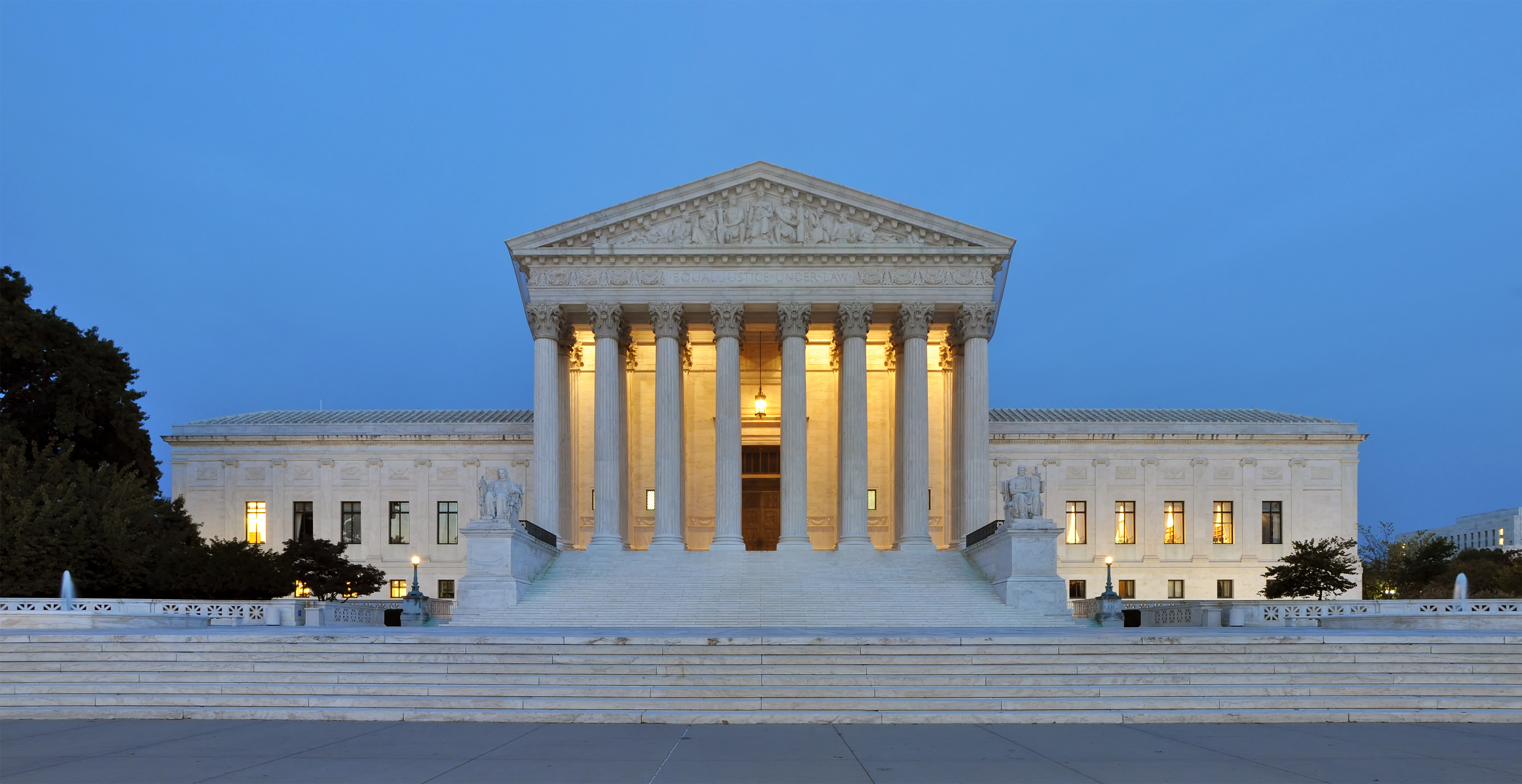 United States Supreme Court building. Photo by Joe Ravi. CC-BY-SA 3.0.
One of the great ironies of the Watchtower organization is that it has done more to expand the civil liberties of American citizens than almost any other religious group — while simultaneously restricting those same liberties within its own membership. Between 1938 and 1946, Jehovah's Witnesses brought an astonishing 23 separate First Amendment actions before the U.S. Supreme Court, producing a body of case law that forms the bedrock of modern free speech, free press, and free exercise jurisprudence. The right to distribute literature without a government permit, the right to refuse to salute the flag, the right to engage in door-to-door advocacy, the incorporation of the Free Exercise Clause against state governments — all of these fundamental American freedoms were secured in cases brought by Jehovah's Witnesses. Supreme Court Justice Harlan Fiske Stone once quipped that "the Jehovah's Witnesses ought to have an endowment in view of the aid which they give in solving the legal problems of civil liberties." Yet the organization that fought for the right of dissent in the public square punishes dissent within its own ranks with disfellowshipping and shunning. The legal legacy is real and extraordinary — and for those who have been disfellowshipped for expressing doubts, the contrast is stark.
Historical Context: Persecution and Litigation
The legal campaign was born of necessity. In the 1930s and 1940s, Jehovah's Witnesses were among the most persecuted religious minorities in the United States. Under Joseph Rutherford's combative leadership, Witnesses adopted an aggressive style of public evangelism — door-to-door preaching, phonograph playing on street corners, distribution of literature attacking the Catholic Church and mainstream Protestantism — that brought them into direct conflict with local authorities nationwide.
Between 1933 and 1951, there were 18,866 arrests of Jehovah's Witnesses in the United States and approximately 1,500 documented cases of mob violence against them. Witnesses were beaten, tarred and feathered, had their Kingdom Halls burned, and were driven from towns. The violence escalated dramatically after the Supreme Court's 1940 Gobitis decision upheld compulsory flag salutes, which was widely interpreted as a signal that Witnesses were fair game. Attorney General Francis Biddle felt compelled to make a national radio address urging Americans to end the "reign of terror" against Jehovah's Witnesses.[1]
The Watchtower's legal department — led first by Rutherford himself and then by the extraordinary Hayden C. Covington — responded not by retreating but by filing suit after suit, pushing case after case to the Supreme Court. The result was a cascade of landmark decisions that transformed American constitutional law.
Hayden C. Covington: The Forgotten Champion
Hayden Cooper Covington (1911–1978) is one of the most important and least known civil liberties attorneys in American history. Born in Hopkins County, Texas, and educated at what is now St. Mary's University School of Law in San Antonio, Covington joined the Watchtower legal department in 1939 and became chief counsel when Rutherford died in 1942. He was simultaneously elected vice-president of the Watch Tower Society — despite having been a Jehovah's Witness for only five years.
During his tenure, Covington presented 111 petitions and appeals to the U.S. Supreme Court and personally argued 44 cases before the Court. He won 37 of those 44 — a success rate exceeding 84% that may be unmatched in Supreme Court history for any attorney arguing that many cases. His victories established precedents on compulsory flag salutes, public preaching, door-to-door literature distribution, licensing requirements for religious activity, and conscientious objection to military service.
Covington's courtroom style was distinctive: tall, loud, passionate, and dressed in a green suit with a red plaid tie. His legal briefs mixed biblical proof texts with constitutional arguments — an unconventional approach that proved remarkably effective. Beyond the Witness cases, Covington's most famous client was Muhammad Ali (Cassius Clay), whom he represented in the 1960s boxing champion's fight for conscientious objector status during the Vietnam War. In Clay v. United States (1971), Ali's conviction for draft evasion was unanimously reversed.
Covington's later years were difficult. He clashed with Watch Tower president Nathan Knorr and was eventually disfellowshipped — reportedly for a drinking problem — though he was reinstated before his death in 1978. The man who had done more than perhaps any other attorney to secure religious freedom in America was himself subjected to the organization's internal disciplinary apparatus.[2]
Coping with toxic family dynamics, estrangement, and rebuilding your life. For anyone dealing with the fallout of leaving a high-control group.
View on Amazon →Landmark U.S. Supreme Court Cases
| Case | Year | Issue | Ruling | Lasting Impact |
|---|---|---|---|---|
| Lovell v. City of Griffin | 1938 | Alma Lovell, a Witness, convicted for distributing religious pamphlets without a city permit | Unanimous reversal. Ordinance "invalid on its face" as an unconstitutional prior restraint on freedom of the press | Established that pamphlets and leaflets are protected by freedom of the press; distribution cannot require government permission |
| Schneider v. State of New Jersey | 1939 | Anti-littering ordinances used to prohibit distribution of handbills | Struck down. Cities may not use anti-littering laws to suppress the distribution of literature | Protected leafleting and pamphleteering as forms of free expression |
| Cantwell v. Connecticut | 1940 | Newton Cantwell and his sons arrested for soliciting without a permit and breach of the peace while playing anti-Catholic phonograph records door to door | Unanimous reversal. First case incorporating the Free Exercise Clause against the states via the 14th Amendment | Made the First Amendment's Free Exercise Clause binding on state and local governments — one of the most consequential rulings in American religious liberty |
| Minersville School District v. Gobitis | 1940 | Lillian and William Gobitas (misspelled "Gobitis" in court records) expelled for refusing to salute the flag | 8–1 against Witnesses. Schools could compel flag salute in the interest of "national unity" | Triggered a wave of violence against Witnesses nationwide; widely condemned; overturned just three years later |
| Cox v. New Hampshire | 1941 | Witnesses convicted for parading without a permit | Upheld conviction. States may regulate the time, place, and manner of expression but not its content | Established the foundational "time, place, and manner" doctrine for regulating speech |
| Chaplinsky v. New Hampshire | 1942 | Witness Walter Chaplinsky called a city marshal a "racketeer" and "a damned fascist" | Conviction upheld. Established the "fighting words" doctrine | Defined a narrow category of speech — words likely to provoke immediate violence — as unprotected by the First Amendment |
| Murdock v. Pennsylvania | 1943 | City of Jeannette imposed a license tax on Witnesses selling literature door to door | Reversed. A flat tax on religious solicitation is an unconstitutional burden on the free exercise of religion | Established that governments cannot tax the exercise of a constitutional right, including religious evangelism |
| Martin v. City of Struthers | 1943 | City ordinance prohibiting door-to-door canvassing | Reversed. Ordinance unconstitutional | Protected door-to-door canvassing for religious, political, and commercial purposes |
| West Virginia State Board of Education v. Barnette | 1943 | Marie and Gathie Barnett (misspelled "Barnette") expelled for refusing to salute the flag | 6–3 in favor of Witnesses. Overturned Gobitis. Students cannot be compelled to salute the flag or recite the Pledge of Allegiance | The most important JW Supreme Court victory. Established the no-compelled-speech doctrine: "no official, high or petty, can prescribe what shall be orthodox in matters of politics, nationalism, religion, or other matters of opinion" |
| Marsh v. Alabama | 1946 | Witness arrested for distributing literature on the sidewalk of a company-owned town | Reversed. Even on private property functioning as a public space, First Amendment protections apply | Established the "company town" doctrine — private actors performing government functions are bound by constitutional constraints |
| Watchtower v. Village of Stratton | 2002 | Village required a permit before engaging in door-to-door advocacy | 8–1 in favor of Witnesses. Permit requirement violated the First Amendment | Protected door-to-door advocacy (religious, political, and anonymous speech) from permit requirements — applicable to political canvassers, student activists, and others |
The Barnette Decision: A Closer Look
West Virginia State Board of Education v. Barnette (1943) deserves special attention as arguably the single most important First Amendment decision of the 20th century — and certainly the most important case ever brought by Jehovah's Witnesses.
The decision came just three years after Gobitis, during the height of World War II, when patriotic sentiment was at its peak. The Court not only reversed itself on the flag salute issue — a rare and dramatic act — but did so on Flag Day, June 14, 1943. Justice Robert H. Jackson's majority opinion produced some of the most quoted language in American constitutional history:
"If there is any fixed star in our constitutional constellation, it is that no official, high or petty, can prescribe what shall be orthodox in matters of politics, nationalism, religion, or other matters of opinion, or force citizens to confess by word or act their faith therein."
Jackson warned that "those who begin coercive elimination of dissent soon find themselves exterminating dissenters. Compulsory unification of opinion achieves only the unanimity of the graveyard."
Crucially, the Barnette decision was grounded not in the Free Exercise Clause but in the Free Speech Clause — meaning its protections extend to all Americans, not merely to religious objectors. Any student, for any reason, has the right to remain silent during the Pledge of Allegiance. This principle has been invoked in countless subsequent cases involving compelled speech, from loyalty oaths to license plate mottos (Wooley v. Maynard, 1977).[4]
The Civil Rights Connection
Harvard Law School professor Josh McDaniel has documented a direct line between the Jehovah's Witnesses' Supreme Court victories and the Civil Rights Movement of the 1950s and 1960s. The precedents established in Witness cases — protecting leafleting, street preaching, door-to-door canvassing, and peaceful assembly — were subsequently invoked by Black civil rights activists who faced prosecution under precisely the same types of local ordinances that had been used against Witnesses.
As McDaniel argues, the connection runs full circle: the Fourteenth Amendment was originally motivated in part to protect Black citizens and religious speech (including abolitionist tracts) from suppression by Southern regimes. When the Supreme Court finally began enforcing those protections in the 1930s and 1940s, it did so largely in response to Witness cases. And when Black civil rights activists needed legal precedent to defend their demonstrations, sit-ins, and voter registration drives, "in case after case, the Court principally relies on the Witness cases as key precedents."[5]
International Legal Impact
The Witnesses' litigation legacy extends well beyond the United States:
Canada: In Roncarelli v. Duplessis (1959), the Supreme Court of Canada found that Quebec Premier Maurice Duplessis wrongfully caused the revocation of a Witness restaurant owner's liquor license because the owner had been posting bail for arrested Witnesses. The case established the principle that government officials cannot use their authority to punish individuals for exercising their rights — a foundational ruling in Canadian administrative law. The Quebec persecution of Witnesses in the 1940s and 1950s, driven by the Catholic-aligned Duplessis government, resulted in over 1,000 arrests and is considered one of the most significant civil liberties crises in Canadian history.
European Court of Human Rights: In Jehovah's Witnesses of Moscow v. Russia (2010), the ECHR ruled that Russia's dissolution of the Moscow community of Jehovah's Witnesses violated religious freedom under Article 9 of the European Convention. Despite this ruling, Russia banned Jehovah's Witnesses entirely in 2017, declaring them an "extremist organization." In Bayatyan v. Armenia (2011), the ECHR Grand Chamber ruled that Armenia violated Article 9 by convicting a Witness for refusing military service, establishing for the first time a Convention-based right to conscientious objection across all 46 Council of Europe member states — a ruling that protects conscientious objectors of all faiths and none.
Conscientious Objection Legacy: Jehovah's Witnesses have been the most consistent advocates for conscientious objector status worldwide. During World War II, over 4,000 Witnesses were imprisoned in the United States for refusing military service. Thousands more were imprisoned in other countries. Their persistence in seeking legal recognition of the right to refuse military service on grounds of conscience contributed directly to the development of alternative civilian service programs in dozens of countries. The irony is that the Watchtower organization itself did not recognize alternative civilian service as a "conscience matter" until 1996 — meaning thousands of Witnesses went to prison unnecessarily because the organization forbade them from accepting available alternatives.
Philippines: The Supreme Court held in 1993 that Witness students could be exempted from flag ceremonies out of respect for religious beliefs, applying principles similar to those established in the American Barnette decision.[6]
The Central Irony
The contrast between the Witnesses' external legal legacy and their internal organizational practices is striking. Consider the parallels:
| Freedom Won Externally | Freedom Denied Internally |
|---|---|
| Right to refuse compelled speech (flag salute) | Members compelled to affirm organizational authority in [baptismal questions](10-02-baptism-born-in.php); disagreement with any doctrine can trigger judicial action |
| Right to distribute literature without government permission | Members forbidden from reading or distributing "apostate literature" — any material critical of the organization |
| Right to freedom of conscience in matters of religion | Members who follow their conscience away from Watchtower teaching are [disfellowshipped and shunned](06-01-disfellowshipping-shunning.php) |
| Right to door-to-door canvassing and advocacy | Former members who canvass against the organization (ExJW activism) are labeled "apostates" and subjected to absolute shunning |
| Right to conscientious objection to state authority | No right to conscientious objection to organizational authority; questioning the [Governing Body](04-01-governing-body.php) is treated as disloyalty to God |
| Protection from government-enforced orthodoxy | Organization enforces doctrinal orthodoxy through social punishment more severe than most government sanctions |
Justice Jackson's words in Barnette apply with equal force to the Watchtower itself: "no official, high or petty, can prescribe what shall be orthodox in matters of politics, nationalism, religion, or other matters of opinion." Yet that is precisely what the Governing Body does — and the punishment for dissent within the organization (total social annihilation through shunning) is arguably more severe than the punishment the Barnette sisters faced from West Virginia (expulsion from public school).
The Witnesses fought for the principle that the state cannot compel a person to express beliefs they do not hold. But within the organization, members are compelled to express belief in every current Watchtower teaching — or face consequences that the state itself is constitutionally prohibited from imposing.
An Honest Assessment
None of this diminishes the genuine legal achievements. The freedoms secured by Jehovah's Witnesses in American courtrooms are real, durable, and benefit every citizen regardless of religion or belief. The Barnette decision alone would justify a permanent place in the history of American civil liberties. Hayden Covington, whatever his personal struggles, was one of the great constitutional lawyers of the 20th century.
But the legacy must be assessed honestly. It is worth noting that the organization fought these cases primarily to protect its own right to proselytize, rather than as a general defense of human freedom. When the Norway government applies freedom-of-religion principles to argue that Witnesses should be free to leave without being shunned, the organization has resisted that application of the same principles it once championed.[8]
See Also
- Legal Battles & Financial Penalties — The organization's more recent legal record
- The Norway Legal Battle (2021–Present) — Where external religious freedom meets internal restriction
- Disfellowshipping & Shunning — Complete History — The internal counterpart to external freedom
- Information Control & Thought Reform — The suppression of the freedoms won externally
- Persecution, Government Conflicts & the Malawi-Mexico Hypocrisy — The double standards in applying conscience
References
1. ↩ Persecution statistics: EBSCO Research, "Jehovah's Witnesses and the Supreme Court" — 18,866 arrests between 1933 and 1951; ~1,500 cases of mob violence. Attorney General Biddle radio address: FIRE, "The Jehovah's Witnesses and the First Amendment." [fire.org]
2. ↩ Hayden C. Covington: Wikipedia, "Hayden C. Covington" — 111 petitions, 44 argued, 37 won (84%); vice-president of Watch Tower Society; Muhammad Ali representation; disfellowshipped and reinstated. First Amendment Encyclopedia, "Hayden Covington." [en.wikipedia.org]
3. ↩ Case table compiled from: Wikipedia, "List of Supreme Court cases involving Jehovah's Witnesses"; First Amendment Encyclopedia entries for Lovell v. City of Griffin, Murdock v. Pennsylvania, and Hayden Covington; FIRE, "The Jehovah's Witnesses and the First Amendment"; EBSCO Research, "Jehovah's Witnesses and the Supreme Court"; Justia U.S. Supreme Court Center case texts. [en.wikipedia.org]
4. ↩ West Virginia State Board of Education v. Barnette, 319 U.S. 624 (1943): Jackson majority opinion; "fixed star" and "unanimity of the graveyard" quotations; decided on Flag Day; grounded in Free Speech Clause. Wikipedia entry. [en.wikipedia.org]
5. ↩ Josh McDaniel, Harvard Law School: "Religious minorities won key Supreme Court cases on freedom of speech, assembly, and more" (2025); forthcoming paper in Washington & Lee Law Review; connection between Witness precedents and Civil Rights Movement case law. [hls.harvard.edu]
6. ↩ International cases: Wikipedia, "List of Supreme Court cases involving Jehovah's Witnesses" — Roncarelli v. Duplessis (Canada, 1959); Jehovah's Witnesses of Moscow v. Russia (ECHR, 2010); Bayatyan v. Armenia (ECHR Grand Chamber, 2011); Philippines Supreme Court (1993). [en.wikipedia.org]
7. ↩ Irony comparison table: original analysis based on documented Watchtower internal practices (see Disfellowshipping & Shunning, Information Control, Baptism Problem) contrasted with external legal victories. [jwfacts.com]
8. ↩ "Honest assessment": analysis drawing on Harvard Law School, FIRE, and First Amendment Encyclopedia scholarship; Norway legal context. Justice Stone quip: Wikipedia, "List of Supreme Court cases involving Jehovah's Witnesses." [firstamendment.mtsu.edu]